AI Was Supposed to Fix Customer Support. So Why Does It Still Feel Broken?
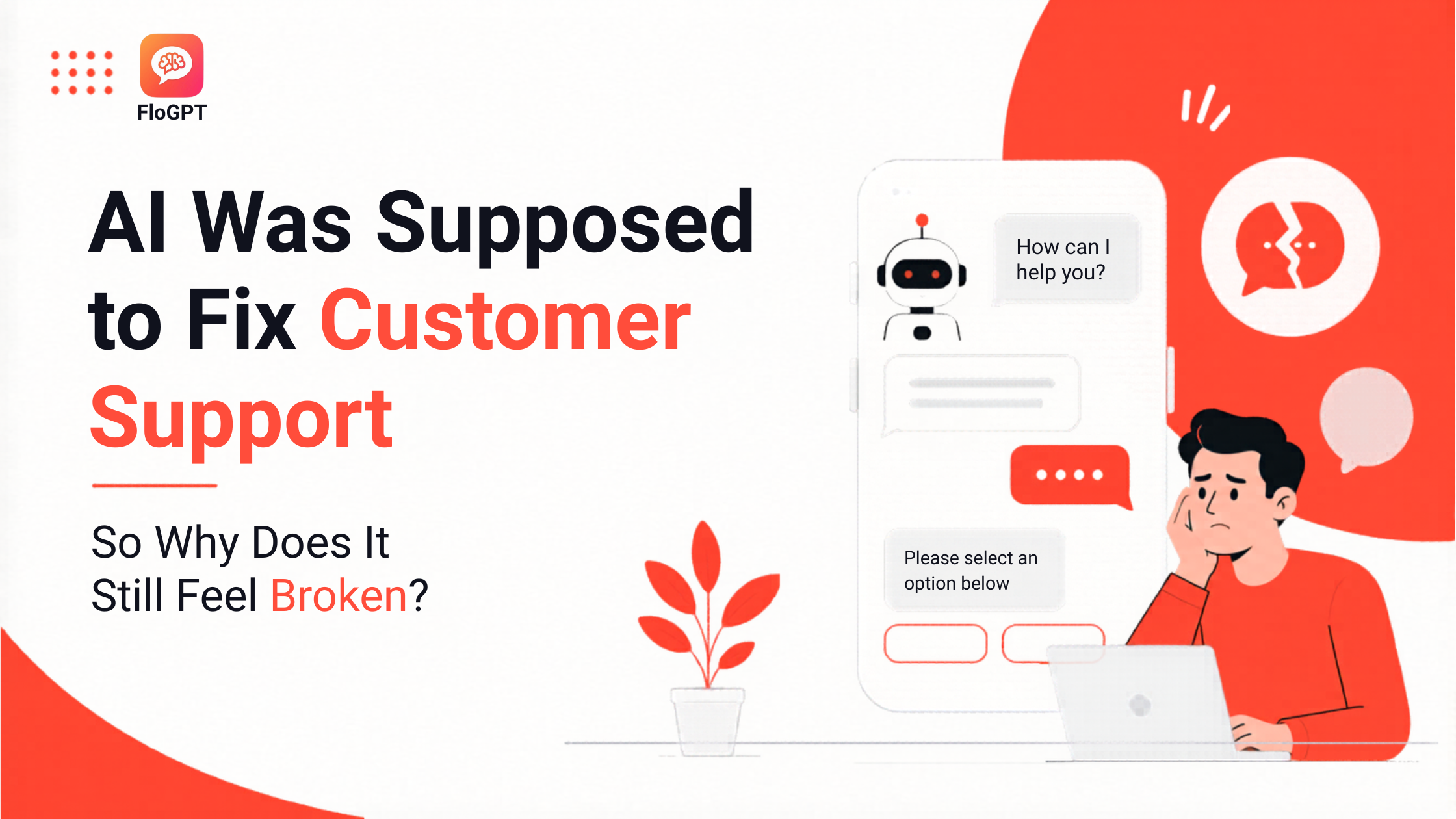
AI promised better customer support but why does it still feel broken? Explore key issues, real causes, and how AI can truly improve support.
Artificial Intelligence promised a future where customer support would be fast, efficient, and even pleasant. No more long hold times. No more repeating yourself. Just instant, helpful answers anytime, anywhere.
And yet, here we are.
Customers still get stuck in endless chatbot loops. Support feels robotic. Simple issues take too long to resolve. So what went wrong?
Let’s unpack why AI hasn’t fully “fixed” customer support and what needs to change.
The Promise of AI in Customer Support
When AI entered customer service, the expectations were massive:
- 24/7 availability
- Instant responses
- Lower costs for businesses
- Personalized experiences
- Reduced workload for human agents
On paper, it sounded like a win-win. Businesses save money, and customers get faster help.
But reality has been… messier.
Where Things Are Breaking Down
1. Automation Without Understanding
Many AI systems are built to deflect tickets, not solve problems.
They rely on scripted flows and keyword detection. If your issue doesn’t fit neatly into those flows, you’re stuck.
That’s why customers often feel like:
- “This bot doesn’t understand me”
- “I’m going in circles”
- “I just want a human”
AI can respond but it doesn’t always understand context.
2. Over-Optimization for Cost, Not Experience
Let’s be honest: many companies adopted AI primarily to cut costs, not improve support.
This leads to:
- Hard-to-reach human agents
- Chatbots acting as gatekeepers
- Delayed escalations
The result? Customers feel blocked instead of helped.
3. Poor Data = Poor Support
AI is only as good as the data it’s trained on.
If:
- Knowledge bases are outdated
- FAQs are incomplete
- Internal systems aren’t connected
Then AI will give:
- Wrong answers
- Generic responses
- Irrelevant suggestions
That’s not an AI problem it’s a data problem.
4. Lack of Personalization (Ironically)
AI was supposed to make support more personal.
But many systems still:
- Ignore past interactions
- Fail to remember customer history
- Treat every query like it’s new
So instead of feeling “smart,” the experience feels repetitive.
5. The Human Touch Is Missing
Support isn’t just about answers it’s about empathy.
Customers want:
- To feel heard
- To feel understood
- To feel valued
AI struggles with nuance:
- Frustration
- Urgency
- Emotion
Without that, even correct answers can feel cold.
The Real Problem: Misuse, Not Technology
AI itself isn’t the failure.
The issue is how it’s being used:
- Replacing humans instead of supporting them
- Prioritizing efficiency over experience
- Implementing AI without strategy
When AI is treated as a shortcut, it becomes a problem.
What Good AI Support Actually Looks Like
AI can fix customer support but only when used right.
Here’s what works:
1. AI + Human Collaboration
AI handles:
- Simple, repetitive queries
- Quick lookups
- First-level triage
Humans handle:
- Complex issues
- Emotional conversations
- Edge cases
2. Smart Escalation
Customers shouldn’t have to fight to reach a human.
Good systems:
- Detect frustration
- Offer escalation early
- Transfer context seamlessly
3. Context-Aware Responses
AI should:
- Remember past interactions
- Understand intent, not just keywords
- Provide tailored answers
4. Continuous Learning
The best support systems:
- Learn from conversations
- Update knowledge bases regularly
- Improve over time
Why This Matters More Than Ever
Customer expectations are rising fast.
People now expect:
- Instant replies
- Accurate solutions
- Frictionless experiences
If support feels broken, customers don’t wait they leave.
Bad support is no longer just annoying it’s expensive.
The Future of AI in Customer Support
We’re not at the end. we’re in the middle of the transition.
The next wave of AI will focus on:
- Better language understanding
- Real-time personalization
- Emotion-aware interactions
- Seamless human-AI collaboration
The goal isn’t to replace humans.
It’s to amplify them.
Final Thoughts
AI didn’t fail customer support.
It just hasn’t been implemented thoughtfully - yet.
The companies that win will be the ones that:
- Put customers first
- Use AI to enhance, not replace
- Balance automation with empathy
Want Smarter AI Content Like This?
If you’re exploring how AI is shaping industries from customer support to business workflows platforms like flogpt.com are built to help you generate high-quality, insightful content faster and more effectively.
Frequently Asked Questions (FAQs)
Why does AI customer support feel frustrating?
Because many systems rely on rigid scripts and don’t truly understand user intent, leading to repetitive and unhelpful responses.
Is AI replacing human customer support?
Not completely. The best approach is a mix of AI for speed and humans for complex or emotional issues.
Can AI actually improve customer support?
Yes but only when used correctly, with good data, proper design, and human collaboration.
What is the biggest problem with AI in support today?
Over-automation. Many companies use AI to reduce costs instead of improving customer experience.
Will customer support get better in the future?
Yes. As AI becomes more context-aware and human-like, support experiences will improve significantly.